









Guides 6 min read
Eau de parfum vs eau de toilette: what the label is telling you
Parfum, eau de parfum, eau de toilette, cologne and body mist, what each usually means, and what it changes once it is on your skin.
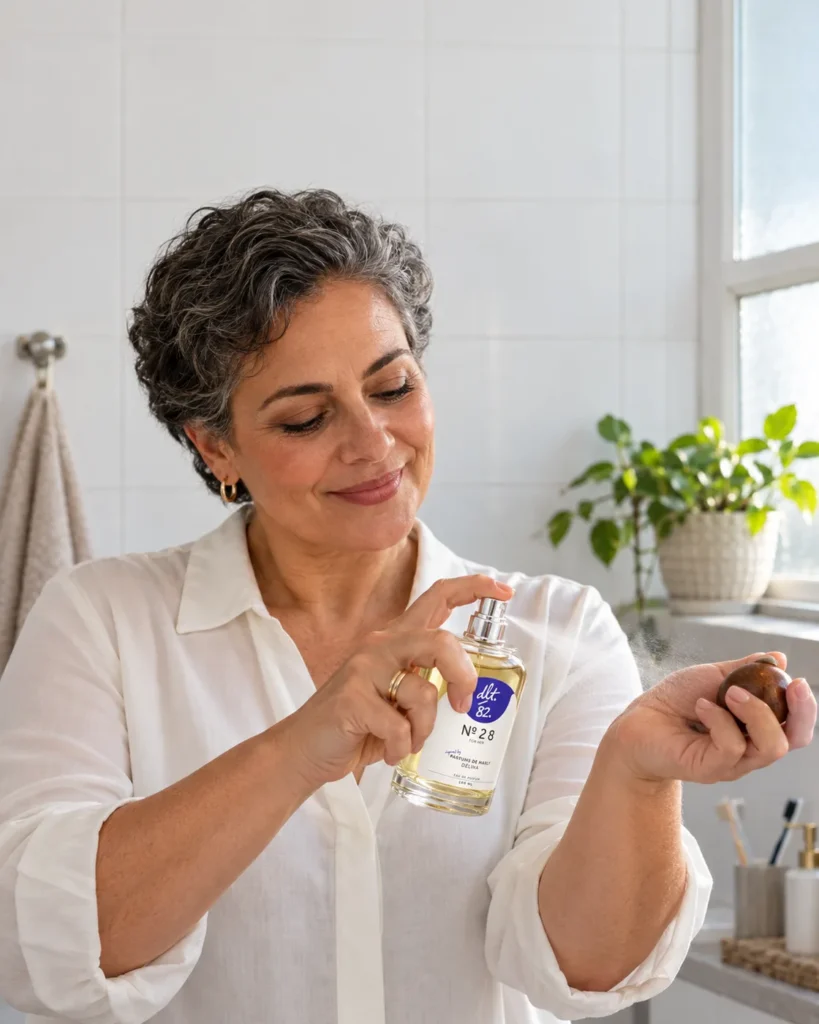
Eau de parfum vs eau de toilette is the question printed, in very small type, on the front of nearly every perfume bottle, and almost nobody gets a straight answer to it at the counter. The short version: it is about how much fragrance oil is in the bottle. The longer version explains why two bottles with the same name can behave so differently on your skin, and why that matters even more when you are buying a perfume inspired by someone else’s.
What the words on the bottle mean
Every perfume is fragrance oil mixed into a base of perfumer’s alcohol. The oil is the smell. The alcohol carries it off your skin so you can smell it, then evaporates. The name on the bottle tells you roughly how much of the mix is oil.
There is no law that fixes these numbers, and every house sets its own. The ranges below are the ones most commonly published, so read them as typical, not as rules.
Parfum, or extrait de parfum
Usually around 20 to 30% fragrance oil, sometimes higher. The most concentrated version, often sold in small bottles. It tends to sit closer to the skin, with less of the loud opening and more of the heart and base.
Eau de parfum (EDP)
Usually around 15 to 20%. The version most people mean when they say “perfume”. Enough oil to carry a scent through a working day on most skin, with room for the opening to make an impression.
Eau de toilette (EDT)
Usually around 5 to 15%. Lighter, brighter, often with more emphasis on the top notes, the citrus and the fresh, sparkling part you smell first. It generally fades sooner and is easier to wear heavily.
Eau de cologne (EDC)
Usually around 2 to 4%. A splash. Traditionally citrus, meant to be refreshing for an hour or so rather than to last. Not to be confused with “cologne” as a general word for men’s fragrance, which is how most people use it.
Body mist
Usually around 1 to 3%. Mostly alcohol and water with a little scent. Pleasant, cheerful, and gone by lunch. Good after the gym. Not a perfume.
Eau de parfum vs eau de toilette on skin
The difference you notice is not only strength. A few things change when there is more oil in the bottle.
- How long it stays. More oil generally means more scent left on your skin after the alcohol has gone. An eau de parfum usually outlasts an eau de toilette of the same scent.
- Which part of the scent you get. Top notes, like citrus and mint, are the lightest and go first in any concentration. A higher concentration gives the heart and base, the florals, woods, ambers and vanillas, more to work with, so they show for longer.
- How far it carries. How much a scent spreads away from you depends on the materials as much as the concentration. A fresh eau de toilette can feel louder in the first ten minutes than a soft eau de parfum. The eau de parfum is usually the one still there in the afternoon.
- How many sprays you need. Fewer with an eau de parfum. Two or three is plenty for most scents. One is enough for the heavy ones.
Your skin also has a say. Dry skin holds scent less well than moisturised skin, and heat makes a perfume spread faster and fade faster. A Cape Town February and a Joburg July will treat the same bottle differently.
Same name, different perfume
A designer scent can come out in more than one concentration, and the versions are not always the same formula at different strengths. An eau de toilette and an eau de parfum sharing a name can have different notes altogether. If you love one version, check which one it is before you buy anything with that name on it.
Eau de parfum vs eau de toilette: why the label matters for inspired-by perfume
This is where the difference stops being trivia.
An inspired-by perfume follows the character of a designer scent. If the seller does not tell you the concentration, you have no way of knowing if you are buying something with the body of an eau de parfum or the lightness of a body mist. Both can smell right for the first five minutes. Only one of them is still there at four o’clock.
So look for two things on the label or the product page:
- The type. Eau de parfum, eau de toilette, or something else.
- The percentage. The actual amount of fragrance oil. A seller who knows it will say it.
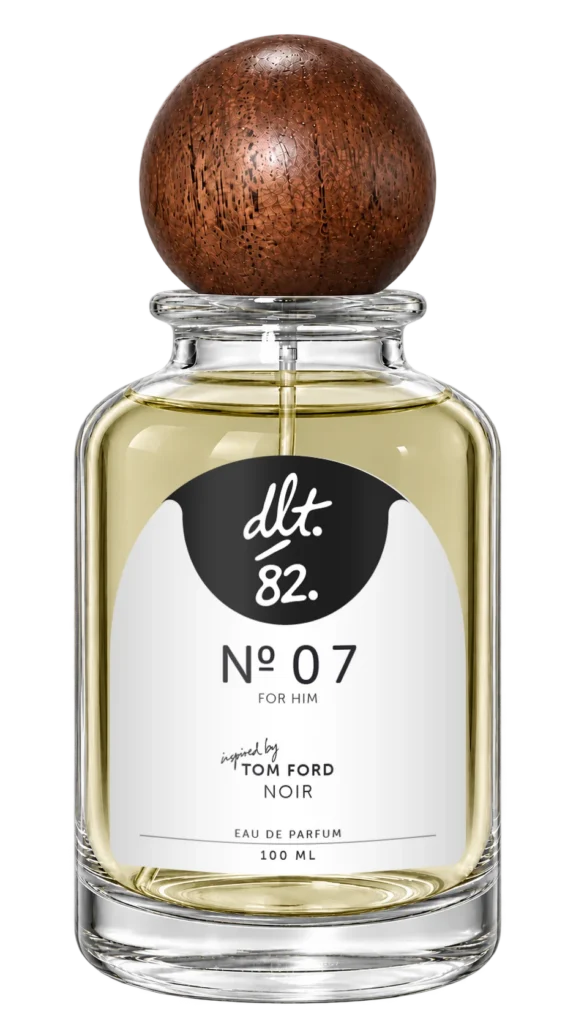
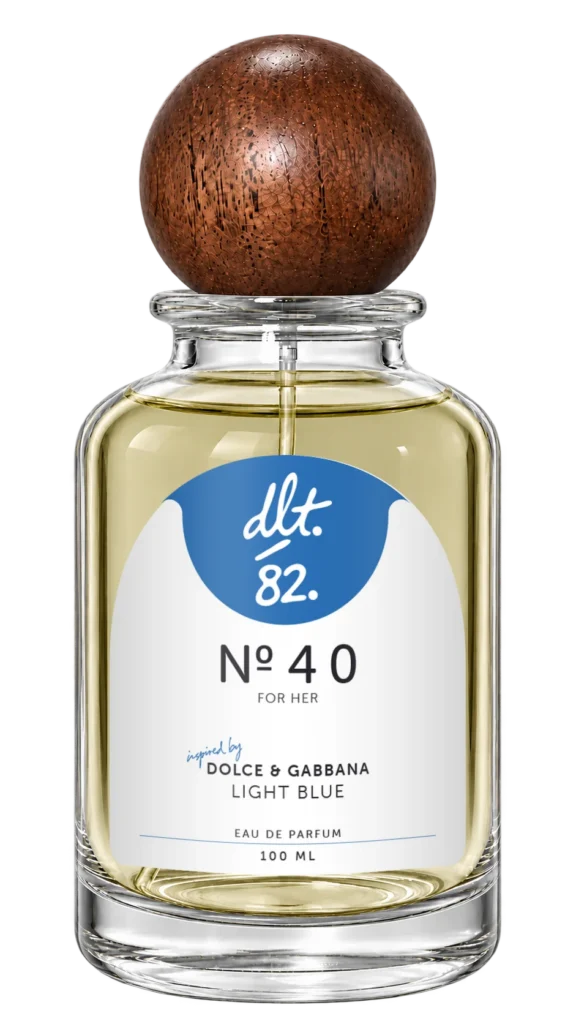
Ours are all eau de parfum, at 20% fragrance oil, which puts them at the upper end of the usual eau de parfum range. That goes for the light, fresh ones like dlt/40, inspired by Dolce & Gabbana Light Blue, and for the dense, late-night ones like dlt/07, inspired by Tom Ford Noir. The concentration is the same. What changes is what is in the oil: lemon and green apple in one, pepper, violet, amber and leather in the other.
So which should you choose?
There is no wrong answer, only a wrong fit.
- Choose an eau de parfum if you want one application to see you through the day, or if you like the warm, deeper part of a scent, the part that shows up an hour in.
- Choose an eau de toilette if you like to reapply, work in close quarters, or want something light enough that you never have to think about how many sprays.
- Keep a body mist for the gym bag. It is not doing the same job.
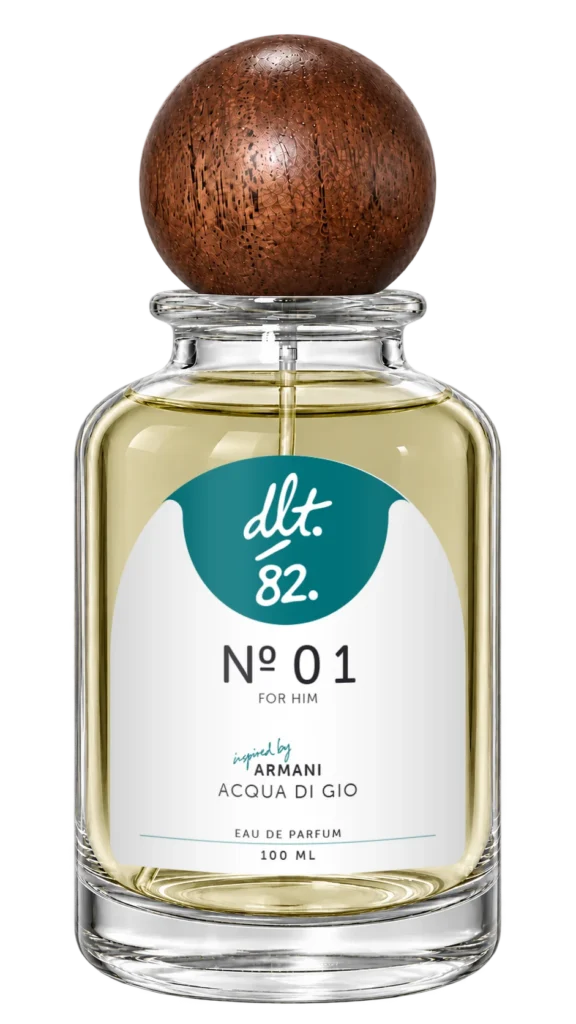
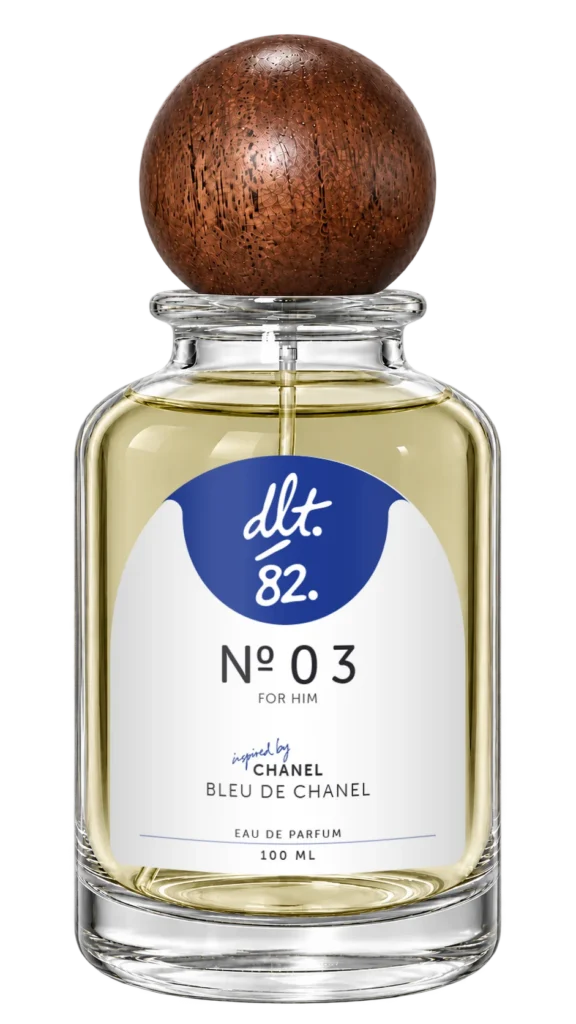
If you like the idea of an eau de parfum but worry about it being too much in summer, pick from the fresh family rather than dropping the concentration. dlt/01, inspired by Armani Acqua di Gio, and dlt/03, inspired by Bleu de Chanel, are both eau de parfum and both built around citrus. The scent finder will show you the rest of the Fresh family, or anything else you are after.
Frequently asked questions
Is eau de parfum stronger than eau de toilette?
Usually, yes. Eau de parfum typically has around 15 to 20% fragrance oil and eau de toilette around 5 to 15%. Those are common ranges, not rules, and each house sets its own.
Which lasts longer, eau de parfum or eau de toilette?
Eau de parfum, in most cases, because there is more oil left on the skin once the alcohol evaporates. Your skin, the weather and the notes in the scent all play a part too. Citrus fades faster than vanilla in any concentration.
Is parfum the same as eau de parfum?
No. Parfum, also called extrait de parfum, is usually more concentrated, around 20 to 30% or more. Eau de parfum is the step below it.
Can I wear eau de parfum in summer?
Yes. Use fewer sprays and choose a fresher scent. Heat makes any perfume spread faster, so an eau de parfum built on citrus and musk will feel lighter in December than one built on amber and vanilla.
Featured in this article
More from the Journal
All notes
Guides 5 min read
Perfume gift ideas: how to choose a scent they will actually wear
How to buy perfume for someone else without guessing, plus picks for him, for her, and for whoever likes it sweet or fresh. Order early for…

Guides 6 min read
How to make perfume last longer on skin
Moisturiser, pulse points, the wrist-rubbing habit, where you keep the bottle, and why you stop smelling your own perfume by ten o'clock.
Guides 7 min read
Perfume dupes in South Africa: what you are actually buying
What a dupe actually is, how it is made, and the six things to check before you buy one in South Africa.